
Shipwrecks of Dubln Bay Exhibition at The Substation
3 July 2026
For Centuries, the waters surrounding Dublin Bay have shaped the city’s history, trade and identity. As Ireland’s principal maritime gateway, the approaches to Dublin Port carried constant traffic: merchant ships, fishing boats, naval vessels and passenger steamers moving between Ireland and the rest of the world. Yet this coastline could also be unforgiving. Storms, shifting sandbanks and difficult tides caused hundreds of wrecks and maritime disasters along the Dublin coast.
Historical Wrecks off the Dublin Coast explores shipwrecks and maritime incidents connected to Dublin Bay and the approaches to Dublin Port during the nineteenth and twentieth centuries. Through wrecks, rescue attempts and maritime disasters, the exhibition reveals the dangers of coastal navigation and Dublin’s long relationship with the sea.
Developed jointly by Dublin Port Heritage and Special Projects and the National Monuments Service, the exhibition brings together archaeological discoveries, historical records and maritime stories that continue to shape the history and memory of Dublin Bay.
Dangerous Waters: Shipwrecks of Dublin Bay
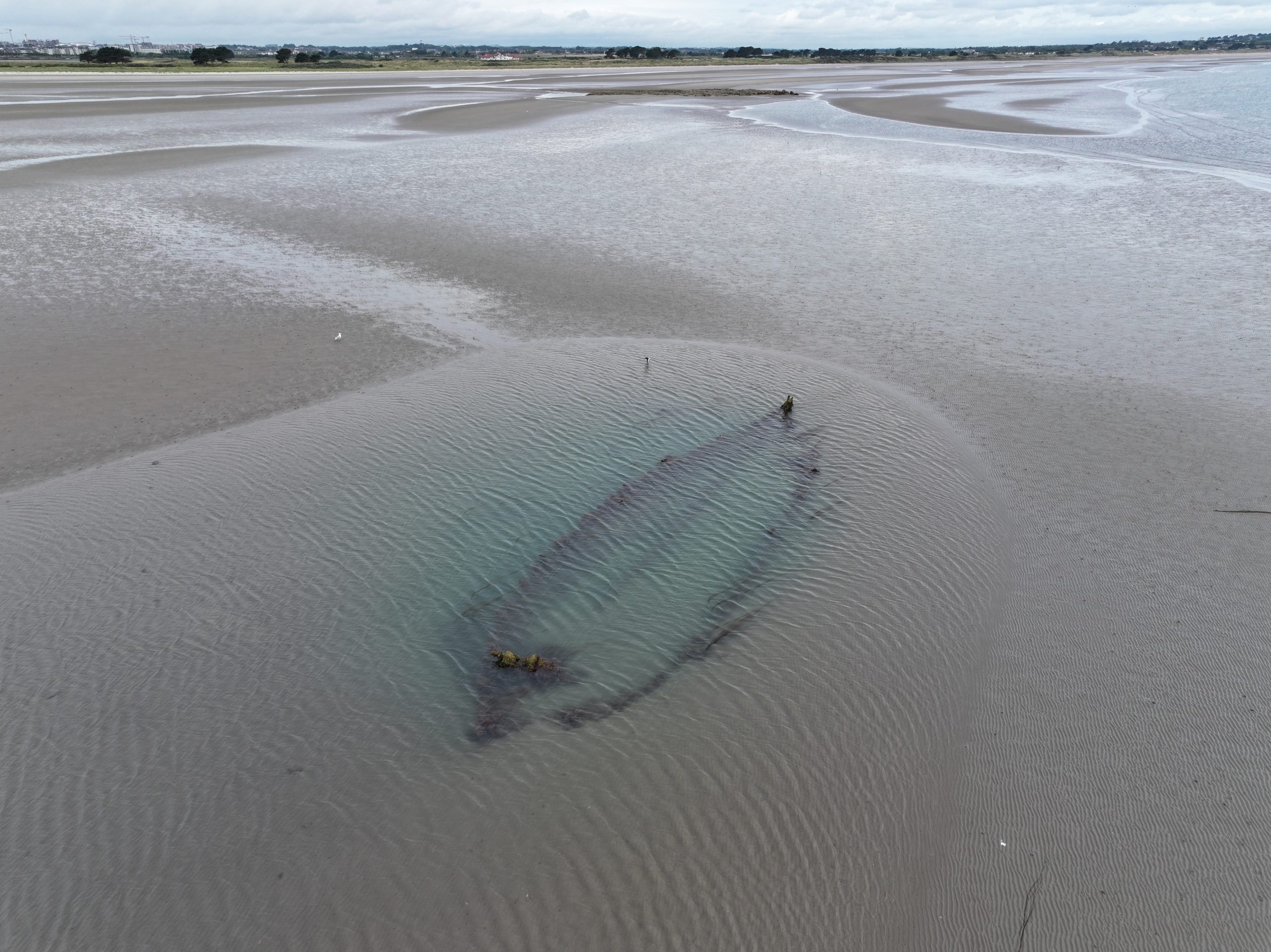
Dublin Bay contains the highest concentration of known shipwrecks in Ireland, with more than 1,700 recorded wrecks off the Dublin coast and approximately 900 historic losses identified within the bay itself.
Open to the Irish Sea and shaped by shallow waters, shifting sandbanks and strong tides, the bay was historically a difficult and often dangerous place to navigate. Combined with heavy maritime traffic, storms and poor visibility, these conditions led to the loss of vessels ranging from small coastal craft to large merchant ships and steamers.
The earliest known wreck in the area is likely represented by a logboat discovered at Sutton in 1935. Found in a sand pit and hollowed from a single oak trunk, the vessel may have been associated with a nearby late Mesolithic settlement dating to c.5500 to 4000 BC, when Sutton may have formed an island within the bay. The discovery of ship timbers associated with Viking shipbuilding traditions off Ringsend during pipeline dredging also suggests the potential for Viking and Anglo-Norman wreck sites within Dublin Bay. More than half of the recorded wrecks off Dublin date to the eighteenth and nineteenth centuries.
Key details
- Dates: 18 June – 18 September 2026
- Days: open Wednesdays, Fridays, and Saturdays
- Time: from 11am – 3pm
- Location: The Substation, Dublin Port – View on Google Maps
- Cost: Admission is Free