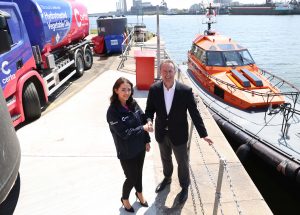

As a commercial semi state company, Dublin Port Company recognises the importance of improving energy efficiency and reducing greenhouse gas emissions. Dublin Port is committed to achieving net zero by 2050, meeting all mandatory public sector targets and playing our part to ensure Ireland reaches its sustainability goals, as set out in the national Climate Action Plan.
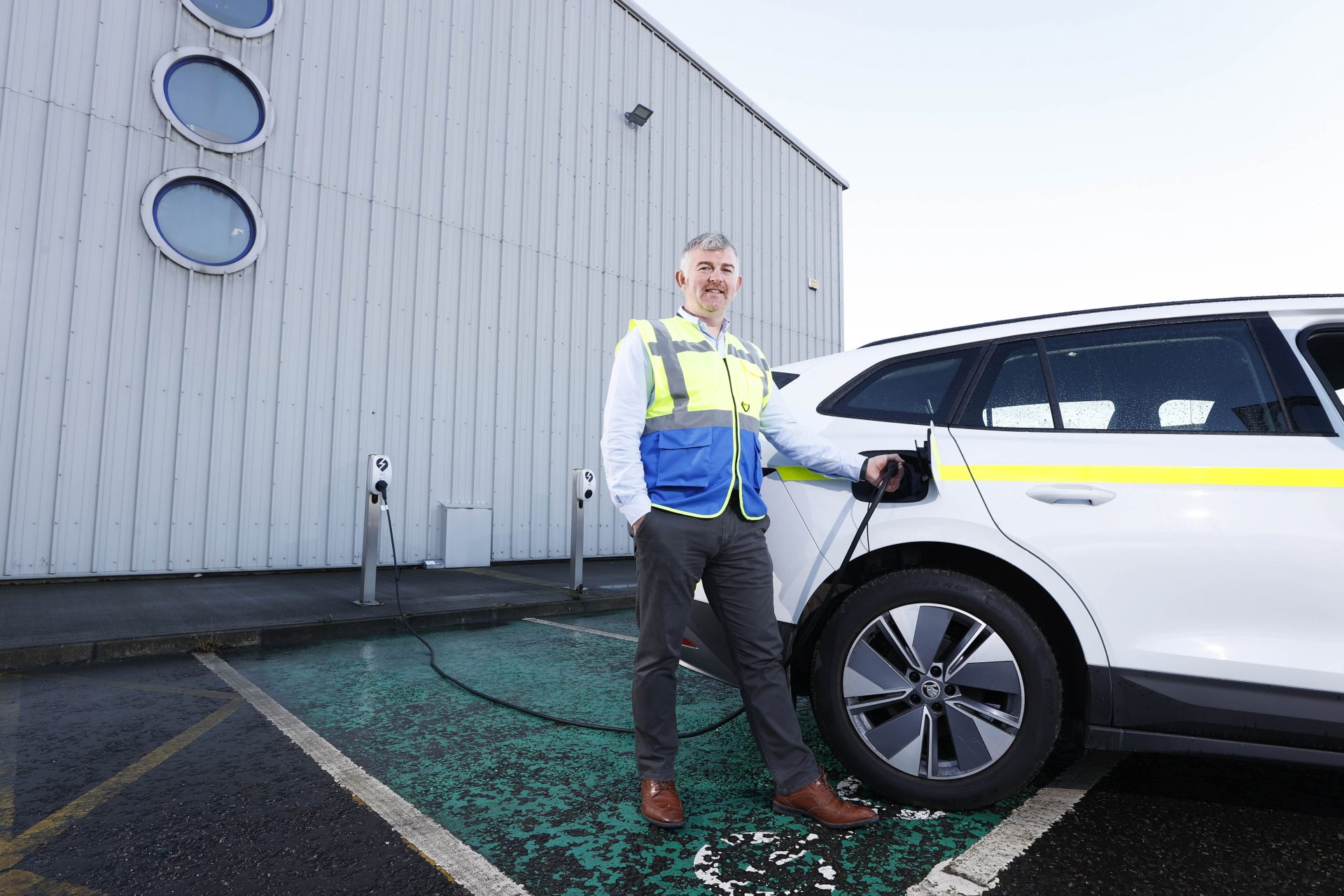
Energy & Decarbonisation Objective Overview
Dublin Port Company (DPC) are continuously working towards reaching energy and decarbonisation targets and in doing so, have introduced the following initiatives to date:
• Continuous energy optimisation of operational assets
• Use of shore side electricity for our Pilotage & Towage services at berth
• Certified to the ISO 50001 Energy Management Standard since February 2017
• Changing all high mast lighting (HML’s) within the Port estate to LED.
• Installation of 204kWp of solar PV on the roof of the Maintenance & Services building
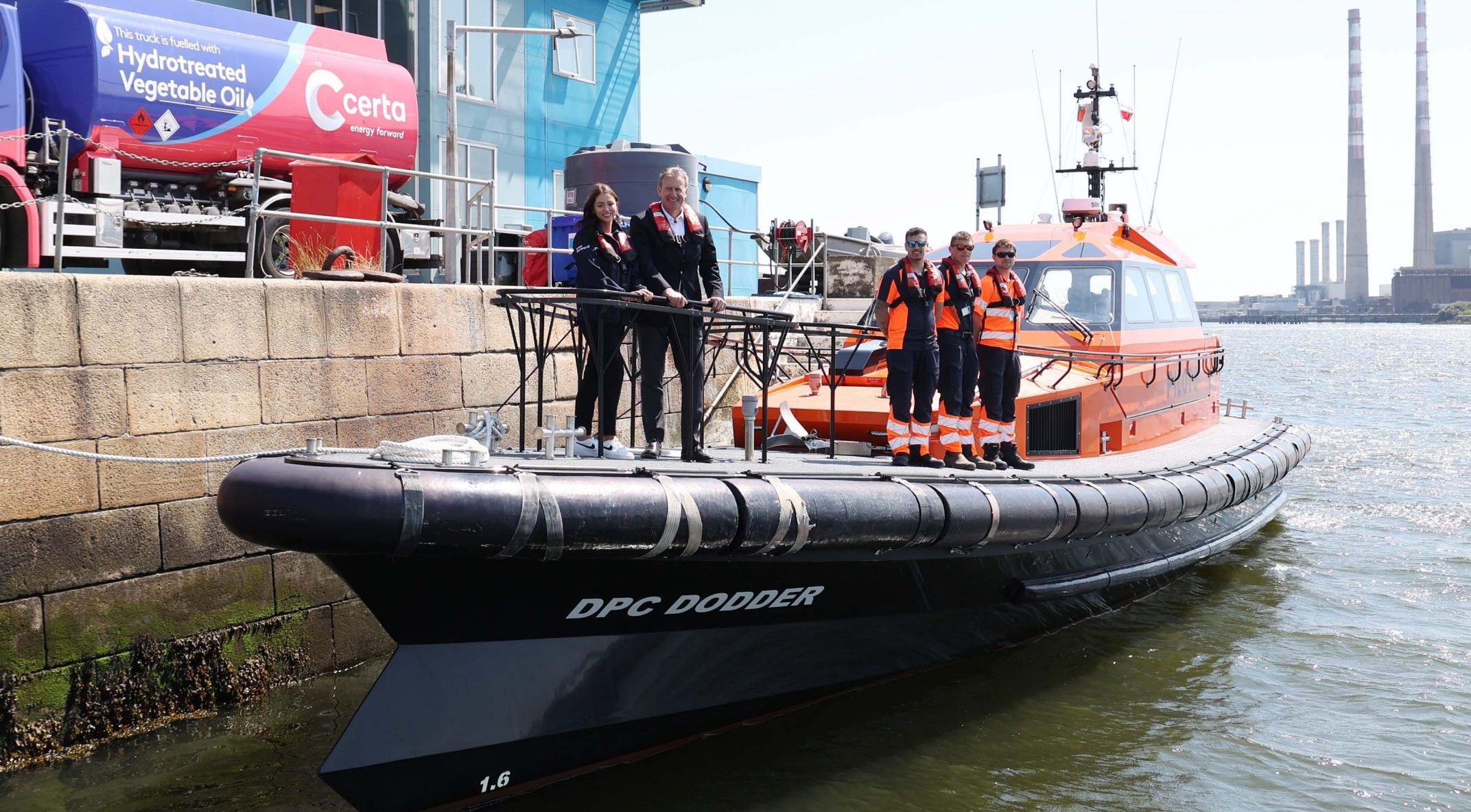
• Converted Pilotage services marine vessels from marine gas oil (MGO) to hydrotreated vegetable oil (HVO)
• Commenced the roll out of fleet replacement, removing our diesel light goods road fleet and using battery electric vehicles (BEV)
Energy Performance
DPC has implemented an energy management programme since joining the Sustainable Energy Authority of Ireland (SEAI) partnership programme.
To help meet our obligations under the public sector energy efficiency targets DPC operates a externally certified ISO 50001 Energy Management System through an accredited certification body.
From our baseline year of 2009 energy consumption continued to fall through to 2023. In 2024 overall energy consumption increased due to revised safety standards for tug boat operations, and increased size and capacity of vessels calling to DPC. 2009 and 2024. Marine Oil is the largest portion of DPCs energy consumption, accounting for 60% of overall consumption in 2024. With this increase in consumption DPC is still in line with its defined reduction glidepath using the SEAIs Energy Performance Indicator.
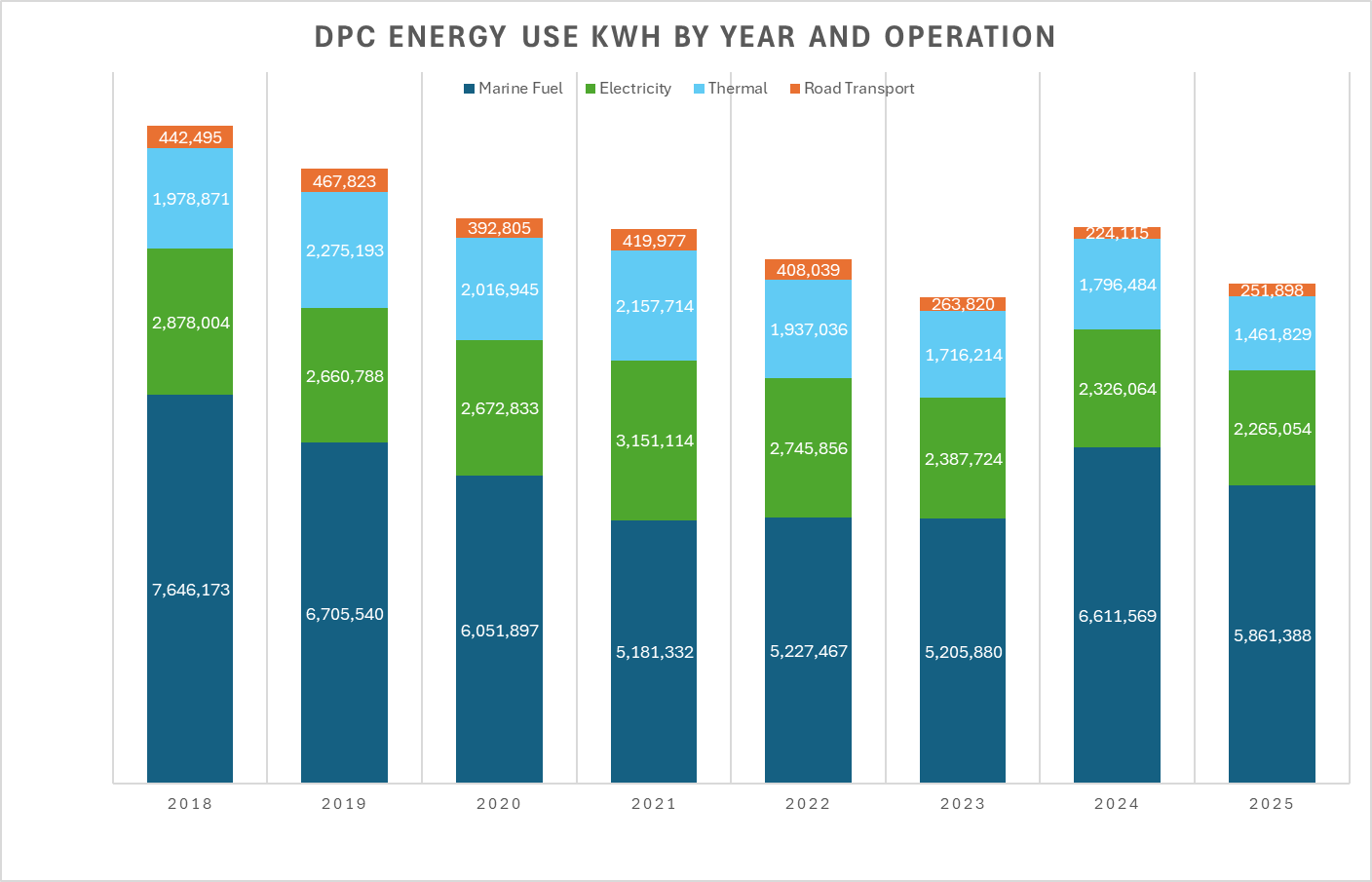
Fuel use by category
The below glidepath outlines Dublin Port’s continued improvement in energy performance since 2009, as reported annually through the SEAI Monitoring & Reporting (M&R) System:
Using the SEAI’s Gap to Target Tool, DPC have identified several future strategic projects and initiatives that will enable DPC to meet its Public Sector Energy Targets, examples include:
• Building energy improvement projects
• Adopting new technologies
• Operational controls related to existing assets
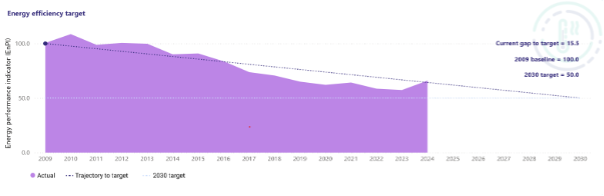
DPCs energy performance KPI as tracked by the SEAI
*Source SEAI M&R reporting system
**Figures reported in 000T/kWh
Decarbonisation
In parallel with DPCs energy management program it also operates a decarbonisation program to meet its Climate Action Plan 2021 commitments, this is also reported through the SEAI partnership programme.
Using the SEAI’s Gap to Target Tool, a range of actions and projects have been identified that will enable DPC to deliver on its Public Sector Decarbonisation Targets examples include:
• Retrofit and energy improvement projects across the estate
• Utilisation of bio/renewable fuels
• Replacing our light goods road fleet with battery electric vehicles
• Operational controls for assts
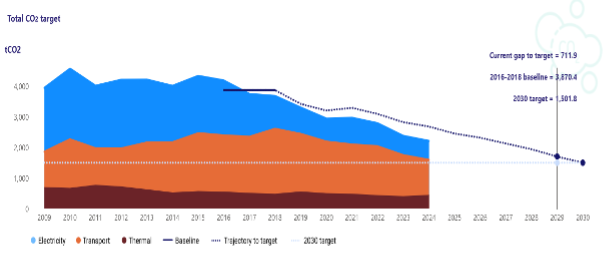
DPCs Carbon Dioxide emissions as tracked by the SEAI
*Source SEAI M&R reporting system
Hydrotreated Vegetable Oil (HVO)
An alternative fuel source
In late 2023 Dublin Port Company (DPC) began to utilise Hydrotreated Vegetable Oil (HVO) as a replacement for Marine Gasoil (MGO) fuel in its pilot boats. The key advantages of this fuel are:
• HVO is made from certified waste vegetable oils and animal fats and offers up to a 90% reduction in net CO2 emissions. HVO has also been observed to reduce soot particle emissions, NOx, SOx and unburnt hydrocarbons.
• HVO is a fossil-free paraffinic diesel, meaning it can be used as a direct replacement for mineral diesel fuel and as a result should require no modifications to engines, assuming engine compatibility.
• To meet greenhouse gas emission reduction targets by 2030, a transition fuel, such as HVO, offers the best solution to assist in achieving 2030 targets.
Using figures reported through the SEAIs Monitoring and Reporting system and using the SEAIs Conversion and Emission factors for 2024, DPC has reduced its CO2 emissions associated with its pilot boat operations by 672 tonnes in 2024.
In late 2026 DPC will begin trials on its tug boat operations to explore the potential to utilise HVO as a replacement for MGO, as the biggest user of fuel in operations this will help DPC significantly reduce its CO2 emissions with a potential further reduction in 899 tonnes CO2 based on 2024 tug consumption records, using SEAI conversion factors.
* information calculated using this link
Contact Info
For any energy or decarbonisation, queries please email energyteam@dublinport.ie
PERS Certificate
Download DocumentISO 50001 Cert
Download DocumentSEAI Public Sector Partnership Certificate
Download DocumentEnergy Policy
Download Document